Pearl's Peril - Hidden Objects
- 4.5
- Rating
- 10.00M
- Installs
- Free
- Price

 Analysis by App-foxy
I first approached Pearl's Peril expecting a familiar hidden-object game: a picture, a list of items, and a quick search before moving on. That basic idea is certainly here, but the presentation gives it more personality than a simple visual scavenger hunt. The game places its puzzles inside a globe-trotting mystery, using illustrated locations, period styling, and a steady stream of discoveries to make each scene feel like part of a larger journey.
It is an adventure game from Wooga, available free of charge with optional in-app purchases ranging from $1.99 to $99.99 per item. The audience rating is Teen, and the game has been available since May 11, 2016. I think those details matter because this is not a tiny one-evening puzzle. It is designed for repeated visits, gradual progress, and players who enjoy returning to a story in short sessions.
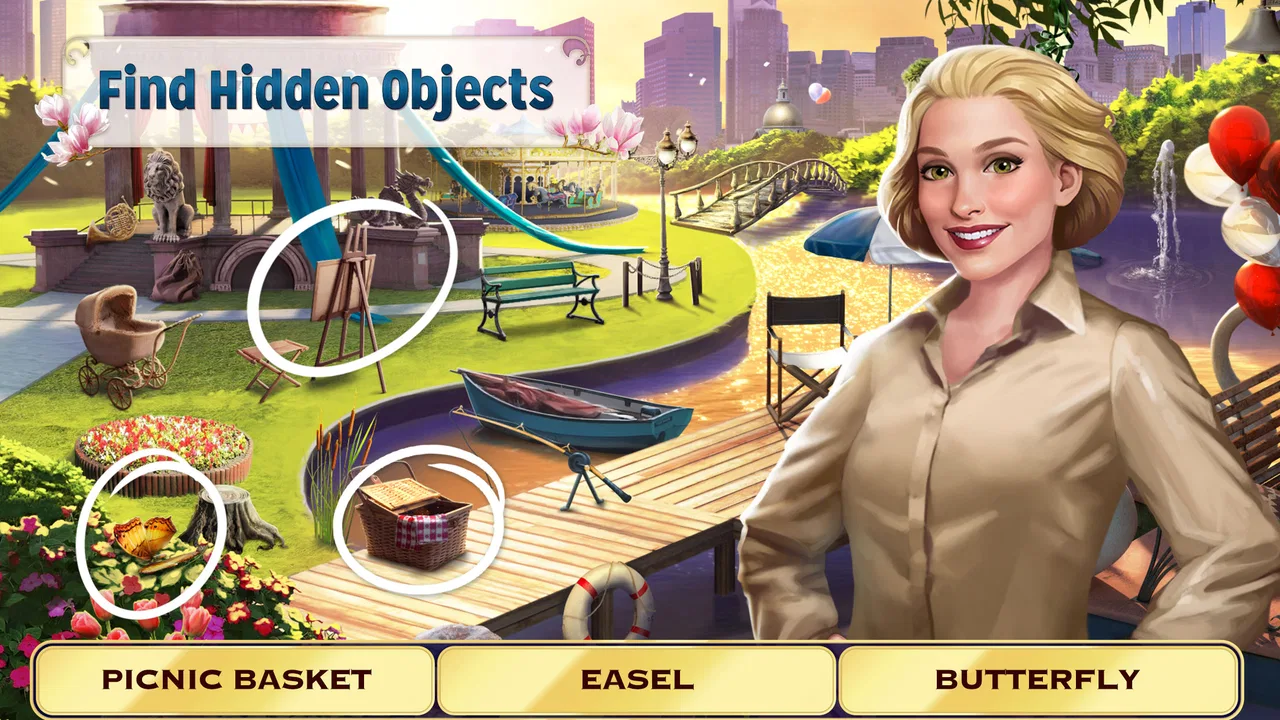
My first impression was strongest when I stopped treating each image as a test of eyesight and started reading it as a designed scene. A crowded room, a dramatic landscape, or a carefully arranged interior is not just a background for objects. The setting establishes the mood before the search even begins. That gives the game a more inviting identity than many basic hidden-object alternatives, even though the central activity remains deliberately simple.
You May Also Like

 Blood Strike: 2.5 Anniversary
Blood Strike’s Loadouts Turn Every Drop Into a Tactical Gamble
A close look at Blood Strike’s custom loadouts: how fast access to signature weapons reshapes its battle royale rhythm, rewards preparation, and narrows the gap between fights.

 Pandora - Music & Podcasts
Pandora’s Music Is Easy to Start, but Harder to Recover
Pandora’s strength is its low-effort path from a seed to a station. Its weak spot is how much confidence it asks you to place in connection, setup, and quiet recovery.

 8 Ball Pool
 Is Built on Rivalries, Rematches, and Routine
A close look at the rivalries, rematches, shared routines, and unanswered safety questions that turn a quick pool match into a persistent mobile community.

 Samsung Music
’s Quiet Strength Is Playing What You Already Own
Its reach comes less from spectacle than from dependable access to a personal library. That simplicity is both the app’s strongest retention engine and its ceiling.

 AccuWeather: Weather Radar
AccuWeather Review: A Quick, Clear Forecast for Everyday Decisions
For everyday plans, the best forecast is the one you can understand quickly. AccuWeather makes rain timing, radar, and local conditions easy to act on, with a few trade-offs.

 Hill Climb Racing
Why Hill Climb Racing Still Turns Crashes Into One More Run
A tiny car, a bumpy hill and one more upgrade: Hill Climb Racing keeps resurfacing because its simple chaos makes every near-miss feel personal.
More From Our News Desk
View All News


Art direction turns each search into a place
The most convincing part of the experience is the way the artwork supports the travel theme. The locations are made to feel distinct, so moving from one scene to another has more impact than simply receiving a new color palette. The visual language suggests a world of expeditions, secrets, and unusual destinations without needing to overwhelm the search itself.
I especially appreciate the balance between decoration and readability. Hidden-object scenes need detail, but too much visual noise can make them tiring rather than challenging. Here, the illustrations generally give me enough context to understand what I am looking at while still making small objects blend into the composition. A tool can sit naturally beside other tools; a piece of furniture may hide a useful shape; an item can be present without being placed in the center like a button.
That design creates a useful distinction between noticing and recognizing. Sometimes I see the right object immediately but need a moment to match it with the wording on the list. At other times, I understand exactly what the clue means but have to inspect the scene carefully. This makes the search feel less like tapping randomly and more like interpreting a picture.
The travel framing also helps the game avoid feeling completely repetitive. Even when the underlying action is familiar, a new setting gives me a reason to pay attention. I am not only asking, “Where is the next object?” I am also taking in the room, the landscape, and the visual clues that make the current stop feel different from the previous one.
A visual style that rewards patience
Players who prefer very clean interfaces may find some scenes busy. That is part of the appeal, but it is also the main visual limitation. The richer the composition becomes, the more likely I am to overlook a small item that is technically visible. I do not consider that unfair by itself, although it can become frustrating when I am playing on a smaller screen or when my attention is already divided.
My practical advice is to avoid rushing through the first glance. I scan the image in sections instead of dragging my eyes randomly across it. I usually begin with obvious landmarks, then check edges, corners, shelves, tables, and areas where similar colors meet. This method is more reliable than repeatedly tapping the same central objects, and it makes the artwork easier to appreciate.
Another useful habit is to read the requested object as a visual category rather than expecting one exact interpretation. A clue may be easier to solve after I imagine its shape, color, or likely location instead of searching for a literal mental photograph. That small change in approach makes difficult scenes feel more thoughtful and less dependent on luck.
Sound and the feeling of a continuing journey
The sound design works best as support rather than spectacle. It helps searches feel like activities inside a larger adventure instead of silent image puzzles. The overall mood is calmer than a fast arcade game, which suits the way the scenes ask me to observe details. I can play for a few minutes without feeling pushed into frantic reactions.
That slower rhythm is important because the game’s appeal depends on atmosphere. The visual settings invite curiosity, while the audio helps maintain continuity between one search and the next. I get the impression of progressing through a mystery rather than opening a disconnected collection of puzzles.
At the same time, players who want a strong musical identity or dramatic action soundtrack may find the presentation restrained. The sound is there to reinforce the setting and pacing, not to become the main attraction. I see that as a good fit for relaxed play, but it means the experience will not satisfy someone looking for constant intensity.
For everyday use, I find the quiet approach useful. I can play during a short break, lower the volume, and still understand what I am doing because the core information is visual. The game does not depend on rapid audio reactions. That makes it easier to fit into a casual routine, although the best scenes deserve enough attention that I would not play them while trying to follow a conversation or watch something else.
How the mechanics fit the mood
At its heart, this is a hidden-object game built around examining scenes and finding requested items. That simplicity is both its strength and its boundary. I do not need a long tutorial to understand the basic loop, and the immediate goal is always clear. When I want a low-pressure activity that still asks me to focus, the format works well.
The adventure structure gives that loop a reason to continue. Instead of treating every scene as an isolated visual exercise, the game connects searches to a broader mystery and a journey through different environments. That connection does not transform the genre into a complex role-playing game, but it gives the familiar puzzle format more momentum.
The pacing is carefully suited to short sessions. I can complete a small piece of progress, put the game down, and return later without needing to rebuild a complicated mental state. This is one of the reasons I would recommend it to someone who enjoys mobile games in brief intervals. The game offers a clear stopping point more often than an action-heavy adventure would.
There is a trade-off, though. If I play for a long stretch, the repeated search pattern can become mentally similar from scene to scene. The changing artwork helps, but it does not erase the fact that I am still scanning images for objects. I would not choose this as my only game if I needed constant mechanical variety. It works better as a steady companion than as an endlessly escalating challenge.
What makes the search more satisfying
The best moments come when the scene, clue, and setting reinforce each other. Finding an object that belongs naturally in the environment feels more rewarding than locating a random symbol placed on top of the artwork. The game benefits when I understand why an item might be there, because contextual thinking becomes part of the search.
I also like approaching a difficult scene in passes. On the first pass, I look for large or distinctive shapes. On the second, I examine repeated patterns and surfaces. On the third, I check places where an object could visually merge with its surroundings. This is more effective than zooming mentally into every pixel from the start, and it preserves the sense of discovery.
Another trade-off is speed. Searching carefully usually improves accuracy, but the game can make me feel tempted to tap quickly when I recognize several items at once. That is where mistakes happen. I get better results by confirming the outline and position before tapping, especially in crowded scenes. The approach is slower, but it keeps the experience calm and avoids turning a thoughtful puzzle into guesswork.
For people who enjoy collecting progress through repeated visits, the structure should feel comfortable. For people who want a single, self-contained mystery with a firm ending, the ongoing format may feel less satisfying. The game is built around continued movement through its world, so its pleasure comes from the journey and the next scene rather than from finishing one compact case in one sitting.
Free entry, optional spending, and the right expectations
The game is free to download and play, which makes it easy to test whether the hidden-object format suits you before spending anything. Optional purchases are available, with individual items priced from $1.99 up to $99.99. I would treat those purchases as a convenience rather than a requirement for deciding whether the core search experience is enjoyable.
My advice is to begin with a clear personal rule: play naturally first, and only consider spending if a particular convenience genuinely improves your routine. Hidden-object games can encourage impatience when a scene takes longer than expected, so buying something in the middle of frustration is rarely a good test of value. If I am enjoying the artwork and pacing without pressure, I am more likely to make a sensible decision.
This model will suit players who like free mobile adventures with optional extras. It may be less appealing to someone who wants to pay once and remove every possible interruption or progression concern. In that case, a premium puzzle game may be a better match, even if it offers fewer locations or a shorter overall experience.
Who will enjoy it most
I would recommend this game to players who like visual observation, illustrated mysteries, and relaxed adventure pacing. It is particularly suitable for someone who wants a game that can be opened during a commute, a waiting room, or an evening wind-down, provided they can give the current scene enough attention to search properly.
It is also a good option for players who enjoy atmosphere as much as mechanics. The locations and presentation give the search activity a sense of place, so the game feels more inviting than a plain list of objects on interchangeable backgrounds. The broad audience is reflected in its average rating of 4.5 from around 328 thousand ratings, while its reach extends beyond a niche puzzle audience with over 10 million installs.
I would be more cautious about recommending it to someone who dislikes hidden-object puzzles on principle. The story framing and art direction add context, but they do not change the central activity. If you need combat, open exploration, rapid reflexes, or deep character customization, this is probably not the right adventure for you.
It may also frustrate players with limited patience for visual clutter. Some people enjoy the moment when an object finally emerges from a busy scene; others experience that same moment as needless obstruction. Neither response is wrong. The game’s strongest artistic choice is also the source of its most noticeable friction.
How it compares with other mobile choices
Compared with a basic hidden-object app, this game feels more cohesive because the scenes are tied to a continuing adventure and a recognizable travel mood. A simpler alternative may be better if you only want quick, isolated searches with minimal story. In that case, the extra framing here could feel like material between puzzles rather than a reason to continue.
Compared with a traditional adventure game, the emphasis is reversed. The setting and mystery provide motivation, but the main interaction is still careful observation rather than exploration, conversation, or action. I would choose this over a more demanding adventure when I want something gentle and easy to resume. I would choose the traditional alternative when I want decisions, movement, and broader control over the world.
It also occupies a different space from competitive puzzle games. There is no need for me to chase another player’s score or react under arcade pressure. That makes it more comfortable for relaxed play, but less exciting for anyone who enjoys direct competition and constant performance goals.
Technical fit and long-term use
The current version is 9.10.2901, and the game requires Android 6.0 or later. That makes the operating-system requirement relevant for anyone using an older device. On a compatible phone or tablet, the main practical question is screen comfort: detailed scenes are easier to inspect when the display gives me enough room to distinguish small shapes.
The Teen content rating is another useful guide for households choosing games together. I would still consider the tone and mystery elements before handing it to a younger player, especially if they prefer purely cheerful puzzles. The rating tells me that it is aimed above a child-focused audience, while the actual appeal comes more from atmosphere and investigation than from shock value.
For long-term use, I would keep sessions varied. Playing several scenes in one stretch can make the search pattern feel repetitive, while alternating short sessions with other activities keeps the visual challenge fresh. I also find that returning later helps with difficult locations because I approach them with a less hurried eye.
My atmosphere verdict
What stays with me is the coherence between the art direction, sound, setting, and pace. The game does not merely place hidden objects inside attractive pictures; it uses those pictures to create a world I want to revisit. The mechanics remain straightforward, but they are supported by enough context to make each search feel like a small part of a wider mystery.
The strongest reason to try it is the way its mood gives familiar searching a sense of place. I enjoy it most when I treat the scenes as illustrations worth exploring rather than obstacles to clear as quickly as possible. That mindset brings out the game’s best qualities: visual detail, gentle tension, and the satisfaction of noticing what was in front of me all along.
My final recommendation is positive, with a clear condition. Choose it if you want a free adventure built around observation, travel-themed settings, and short, repeatable sessions. Skip it if you need fast action, deep mechanical variety, or a completely purchase-free experience. For me, it succeeds because it understands its scale: it is not trying to be an enormous action adventure. It is a polished visual journey where the pleasure comes from slowing down, looking closely, and following the mystery one scene at a time.
After spending time with Pearl's Peril, I would keep it installed for those moments when I want a calm game with enough structure to hold my attention. Its limitations are real, especially the repetition and occasional visual busyness, but the combination of illustrated destinations and measured searching gives it a distinct personality. Among mobile hidden-object adventures, that atmosphere is what makes it worth recommending.
FAQs for Pearl's Peril - Hidden Objects
01What is the main objective of Pearl's Peril - Hidden Objects?
Pearl's Peril is a hidden object adventure game where players are tasked with solving mysteries and uncovering secrets. Set in the 1930s, players accompany Pearl as she investigates her father’s mysterious death, exploring beautifully crafted scenes and finding hidden objects to progress through an intriguing storyline.
02Is Pearl's Peril free to play, or does it require in-app purchases?
Pearl's Peril is free to download and play, but it includes in-app purchases. Players can buy currency and other items to enhance their gaming experience. While purchases can speed up progress, they are not necessary to enjoy or complete the game, allowing for a balanced experience for all players.
03Can Pearl's Peril be played offline, or is an internet connection required?
Pearl's Peril requires an internet connection to play. This is necessary for saving progress, accessing new content, and participating in events. The online connectivity also enables social features, allowing players to connect with friends and compare scores, enhancing the competitive aspect of the game.
04What are the system requirements for Pearl's Peril on Android and iOS devices?
For Android, Pearl's Peril typically requires a device running Android 4.4 or higher, while iOS users need iOS 9.0 or later. It's important to ensure your device meets these requirements to avoid performance issues, such as lag or crashes, and to have enough storage for game updates and additional content.
05How does the social feature in Pearl's Peril work?
Pearl's Peril includes robust social features, allowing players to connect with friends through Facebook. You can visit each other's islands, compete for high scores, and share hints. This social aspect adds a layer of interaction and competition, making the game more engaging as you collaborate and compete with friends.
Pros
- Engaging storyline with rich visuals.
- Frequent updates keep content fresh.
- Challenging puzzles enhance gameplay.
- Intuitive controls for smooth play.
- Offline mode available for travel.
Cons
- In-app purchases can be pricey.
- Some levels require internet connection.
- Occasional ads interrupt flow.
- Limited hints for difficult levels.
- Long loading times on older devices.

Pearl's Peril - Hidden Objects
Gallery